

As we celebrate our 50th year in business, Mason-Kay has been reflecting back on our role in the U.S. jewelry trade since 1976. As wholesale jade suppliers, we have provided retail jewelry stores with jade inventory, testing services, and education. Most people in the industry know us because of our Colors of Jade Chart, which you may have seen yourself while browsing the web or visiting jewelry stores.
One of our favorite things to hear in jewelry stores is when customers say “I didn’t know jade came in that color!”
Most people only think of jade as green, but as jade grows in popularity, people are starting to recognize its other colors: Lavender, blue, ice, red, yellow, white, grey, and black. In this blog post, we’re going to walk you through the real colors of jadeite jade and take you from novice to expert on the topic. While we might touch on nephrite jade a little bit, please note that the focus of this article is jadeite jade.
Note: If you want to better understand which colors of jade are more valuable (and what quality factors determine jade pricing outside of just color), check out this post: Jade Value by Color

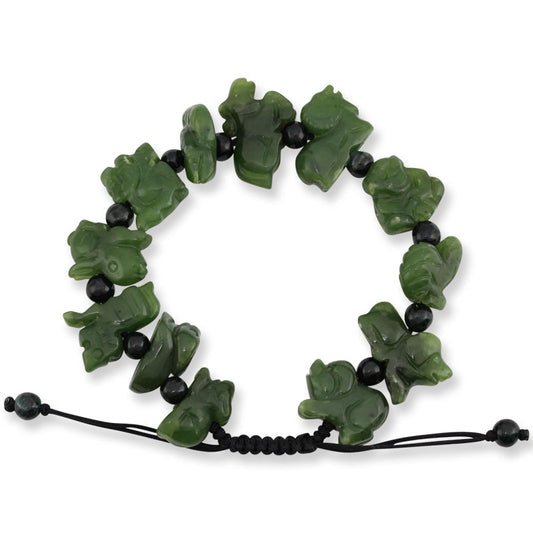
Jade Color #1: Green
At Mason-Kay, our number one priority is natural jade. The vast majority of jade being sold is treated, and that treatment often goes undisclosed. It’s important to buy natural jade because treated jade is less durable, less valuable, and less stable - and often sells for unfairly high prices.

Real Vs Fake Green Jade
Natural jade (meaning untreated) has a natural stable color (meaning the color will not change), and it is very durable and holds its value. Learn more about natural vs treated jade here.

How can you tell if the green jade you’re buying is natural?
You know it’s treated or a simulant if it looks like royalty, but is priced like novelty. In the jade industry, we have a saying: If the price is too good to be true, then it is.
High-qualty natural green jadeite jade is exceptionally rare, and the price reflects that. If a highly saturated, evenly colored, highly translucent green jadeite jade bangle is selling for $500 - run. It’s treated.
(Note: In the case of nephrite jade, this isn’t a concern. Green nephrite jade on the jewelry market is almost never treated. When shopping, you only need to be concerned about whether jadeite jade is treated.)

Green Jade Value
The most valuable color of jadeite jade is green.
(Note: the most valuable color of nephrite jade is white. You can learn about nephrite jade in our article Nephrite Jade vs. Jadeite Jade: What's the Difference?)
What causes jade to be green?
As explained in our blog post all about green jade, the elements that cause green color in jadeite jade are chromium or iron.
What is the meaning of green jade?
The color green represents life, growth and renewal.
Shop green jade jewelry from Mason-Kay Jade |

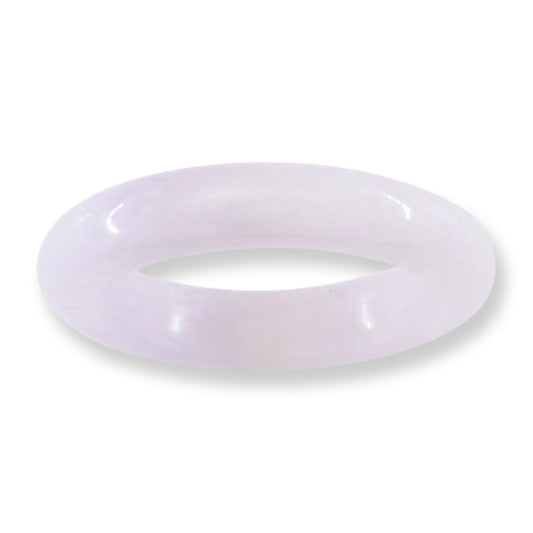
Jade Color #2: Lavender
Is it purple jade? Is it lilac jade? Is it lavender jade?
All of these terms are synonymous. In the trade, we refer to purple jade as lavender because it’s rarely saturated. Lavender jade is often a light, pastel hue. While true-purple jadeite jade does exist, it fetches extremely high prices - easily in the tens of thousands to hundreds of thousands. So if you see a true-purple piece with high translucency and even texture selling for $1,000 as “Type A jadeite jade,” it’s a lie.
Which jades can be lavender?
Actually, jadeite jade and nephrite jade can both be lavender - though lavender nephrite jade is exceptionally rare on the U.S. jewelry market.
As a rule, the term “lavender jade” without qualifiers only refers to jadeite jade, whereas lavender nephrite jade is often referred to specifically by its gem type (nephrite) or origin (typically China). For instance, Qinghai lavender jade would refer to nephrite. It’s also important to note that in China, many sellers refer to all nephrite jade as Hetian jade even if it wasn’t mined in Xinjiang (confusing, I know) - so if you see material called “Lavender Hetian Jade,” that is also nephrite.
What is Turkish purple jade?
More appropriately called “purple jadeite rock,” this aggregate is a mix of quartz, jadeite, and cinnabar and is not considered a jade. It would be highly unethical for a seller to promote this material as “lavender jade.”
What is lilac jade?
The term “lilac jade” typically just refers to lavender jade from Guatemala.
What causes the lavender color?
Lavender in jadeite jade is usually caused by manganese, but in some cases the color is caused by titanium.
What is the meaning of lavender jade?
The color lavender represents calmness, serenity, and devotion.
Shop lavender jade jewelry from Mason-Kay Jade |

Jade Color #3: Blue
Is all blue jade from Guatemala?
No! There is blue jade from Myanmar/Burma, but it’s rarely seen on the U.S. market. Most of the blue jadeite jade seen on the American market today is actually a grey-blue-green jade that comes from Guatemala.
The term “blue jade” without qualifiers refers to jadeite jade, but make no mistake - nephrite jade can be blue as well. In fact, Washington state in the U.S.A. is known to produce beautiful blue nephrite jade with a cat’s eye effect. Nephrite jade from Big Sur, California can also be blue, but this material is very rarely seen in jewelry stores.

Photo courtesy of Jewels of the Trade; the jade quarry at Jade Maya's Hacienda Santiago in Guatemala
What is the significance of blue jade?
Fine, translucent qualities of true-blue jadeite jade can fetch prices in the hundreds of thousands to millions of dollars.
Guatemalan jade was a mystery to the world after the Spanish conquest, not to be rediscovered until the 20th Century. Since its rediscovery, it has taken time for this material to reach U.S. jewelry stores. Now that American jewelers have better access to the material, customers are falling head over heels for it! The blue color has a very modern, contemporary look that speaks to male customers in particular.
Learn more about blue jade on the Mason-Kay Jade blog:
Why Everyone’s Talking about Guatemalan Jade
Jade in History: The Americas, Europe, and New Zealand
Does Jade Change Color?
Shop Blue Jade Jewelry from Mason-Kay Jade |

Jade Color #4: Ice
As we explained in our blog post, Jade Colors Explained: Ice Jade & Water Jade, jadeite is allochromatic. This means that the color of jadeite is determined by the presence of trace elements in its structure. When trace amounts of manganese or titanium are present, the color may be lavender. When trace amounts of chromium or iron are present, the color may be green. But when there are no trace elements, jadeite is colorless.
Colorless jadeite can be either white jade or ice jade, the difference is translucency.
Highly translucent colorless jade is called ice jade.
Is “ice jade” always jadeite jade?
The term “ice jade” always refers to jadeite jade. However, some white nephrite jade can have an “icy” property, meaning translucency. While nephrite jade’s translucency isn’t quite the same as jadeite jades, it does exist.
What is the meaning of ice jade?
Ice Jade is the colorless, translucent variety of jadeite jade. It represents discernment, new beginnings, and strength.
Shop Ice Jade Jewelry from Mason-Kay Jade |

Jade Color #5: Red
I know, I know. It looks orange. In the jade industry, we refer to the whole spectrum from orange to red as “red jade.” We dedicated an entire post on our blog to Red Jade Quality and Value, and it quickly became a fan favorite - attracting more readers than any of our other articles!
What causes the red jade color?
Jadeite jade is a polycrystalline aggregate, so it’s mined in boulders. The inside the boulder is where you’ll find the intermixing of green, white and lavender color. As the outside of the boulder oxidizes, it undergoes a secondary coloration via iron staining. This iron is responsible for the yellow, red (orange), and brown jade colors.
What is the meaning of red jade?
Red jade is associated with the element fire and represents power, celebration and good fortune.
Shop Red Jade Jewelry at Mason-Kay Jade |

Jade Color #6: Yellow
Yellow jade has been picking up steam in the Chinese market over the past couple of years, sparking interest across the globe. One of the most affordable colors of jade, we have deemed it the most underrated jade color because of its appeal. Yellow jade is almost never treated, so don’t be worried if you stumble upon a fabulous yellow jade carving with a nonthreatening price tag.

Why isn’t yellow jade considered “imperial jade?”
…You’d think it would be, right?
Many people assume that the most revered jade in ancient China was the finest green jadeite jade, but that isn’t the case. Historically, China’s elite treasured white nephrite jade above all else. It wasn’t until the 1700s, when the region now called Myanmar began exporting jadeite jade to China, that this striking variety became widely available. Emperor Qianlong, one of jade’s most famous patrons, was captivated by the vivid green hues of this new jade.
Some experts speculate that if an abundant supply of high-translucency, ultra-fine yellow jadeite had been discovered, it might have taken the title of “imperial jade.” However, such material remains exceedingly rare, leaving ultra-fine quality green jadeite jade to be considered “imperial.”
Can nephrite jade be yellow?
Yes! Without qualifiers, “yellow jade” typically refers to jadeite jade. But nephrite jade can come in yellow as well. Don’t confuse this material with yellow serpentine, a common simulant of nephrite jade.
What is the meaning of yellow jade?
Yellow jade represents happiness and optimism.
Shop Yellow Jade Jewelry from Mason-Kay Jade |
Jade Color #7: Black
I think we could write a book about black jade here at Mason-Kay. Seriously. The topic is fascinating! Be sure to check our blog article Black Jade: The Secret of Black Jadeite Jade.
Here’s the main thing you need to know:
There is black jadeite jade.
There is black nephrite jade.
There is grey jadeite jade.
Yes, grey. (Or gray, depending on how fancy you are.)

At Mason-Kay, most of our black jade is nephrite jade.
Most of our grey jade is jadeite jade.

This is because highly translucent qualities of black jadeite jade are not only very valuable, but difficult to source due to their rarity. Highly translucent black jade glows green under a flashlight, and is very desirable because of this.

Black jade is actually just highly saturated green jade, so the black color comes from high concentrations of chromium.
Shop Black Jade Jewelry from Mason-Kay Jade |